
Share
Share

What Is A Facelift?
Before delving into the world of mini-facelifts, patients should know about regular facelifts. A facelift is a surgical procedure that reduces the appearance of fine lines, wrinkles, and folds in the skin. The medical term for a facelift is a rhytidectomy. A facelift requires doctors to make incisions around the face to pull back the skin and repair the tissues underneath physically. Sometimes, doctors perform a neck lift in addition to the facelift to remove sagging skin.
What happens during a mini-facelift?
A mini-facelift is slightly less invasive than a traditional facelift. A mini-facelift is usually suitable for patients without a lot of excess skin to remove. Therefore, a mini-facelift leaves smaller scars due to smaller incisions. Mini-facelifts are also less expensive and require a shorter recovery time.
Are the techniques for a mini-facelift and a regular facelift the same?
Facelifts are unique because everyone’s face is uniquely different. Different surgeons develop various techniques to sculpt each patient’s face properly. The mini-facelift focuses on the lower half of a person’s face, especially around the mouth and jawline. Some surgeons have a standard procedure technique and tweak things depending on how the patient wants to look. Patients should discuss surgical techniques and the desired look before surgery.
What are the side effects of a mini-facelift?
The side effects of a mini-facelift are similar to the impact of a traditional facelift. During this procedure, patients will experience:
- Swelling
- Bruising
- Redness
- Soreness
- General pain
- Numbness
Some doctors may also perform a brow lift or eye lift during the procedure to tighten skin in these areas. Any additional procedures may cause soreness and bruising.
How long is the recovery phase after a mini-facelift?
The recovery time after a mini-facelift depends on the patient. On average, mini-facelift patients take a few weeks to recover. Before surgery, doctors will give patients advice about medications to stop taking and to stop smoking. Usually, doctors use local or general anesthesia during the surgery and patients are sent home the same day. This is why the procedure is called a weekend mini-facelift.
Should I talk to my doctor about a weekend mini-facelift?
Patients with any questions regarding facelifts should reach out to a plastic surgeon. A board-certified plastic surgeon will answer all questions and discuss the various surgical techniques.
Related Posts...
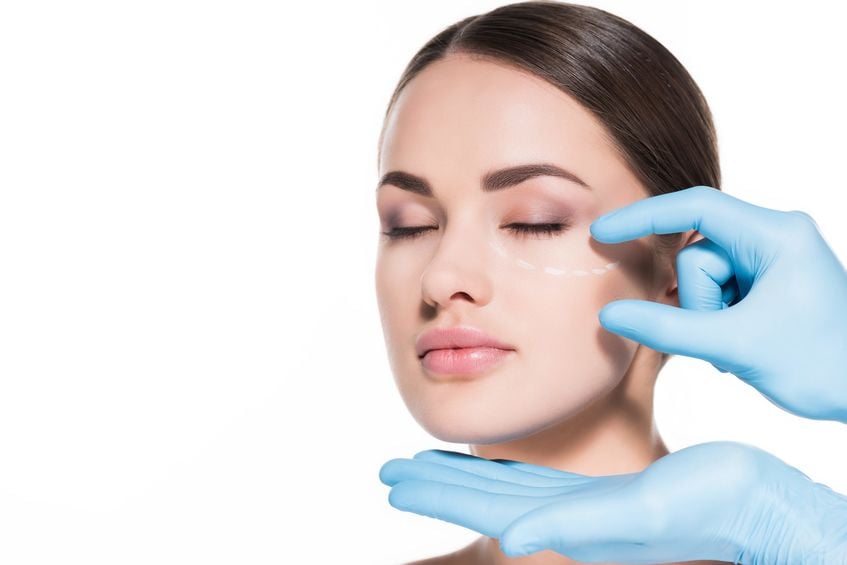
Modern lower blepharoplasty uses fat repositioning and preservation to smooth under-eye bags while maintaining natural volume and a refreshed appearance.

Aging around the eyes needs a specific procedure. Learn whether blepharoplasty or a brow lift is best.
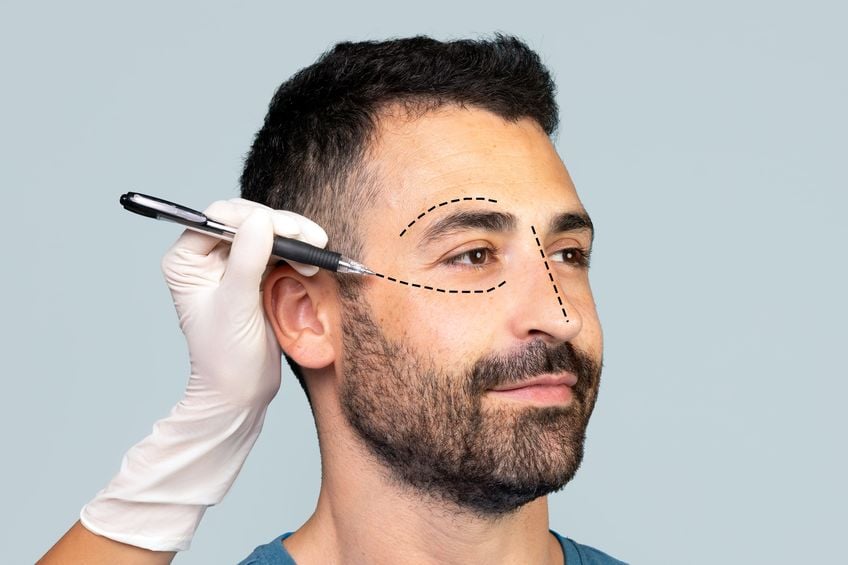
Turn back the clock on tired eyes. See how combining upper and lower blepharoplasty restores both appearance and function.

A facelift can tighten loose skin, but surgery cannot undo years of sun damage or poor skin health. Learn why skin quality matters before surgery.