Share
Share
Curves That Fit Your Frame
Breast shape can change for different reasons. Sometimes fullness never develops at all. In other cases, curves shrink or change after pregnancy, weight loss, or aging. Mammary hypoplasia refers to the kind of underdevelopment that begins during puberty and often leaves the chest looking flat, spaced, or uneven. Regardless of the cause, the result can feel out of proportion. Restoring breast shape starts with knowing why the change happened.
The shape that never came
Mammary hypoplasia is a condition where breast tissue does not fully develop during puberty. Breasts may look small, spaced apart, or narrow at the base, with most volume low on the chest. Some appear tubular or have enlarged areolas due to limited internal structure. While not harmful, the condition can make the chest look out of proportion. Breast augmentation helps restore volume, symmetry, and balance by filling in what nature left out.
Why gravity takes over
Sagging happens when skin stretches and tissue shifts. For people with mammary hypoplasia, sagging can show up early since natural support is limited. Breasts may look deflated or sit lower on the chest. Nipples can point downward. Pregnancy, weight loss, and age can deepen the effect. A lift or augmentation may help restore shape and position.
Restoring balance and shape
Implants add volume and shape, especially to the upper breast where hypoplasia leaves gaps. This smooths out the profile and helps clothes fit better. Augmentation can round out the base, balance asymmetry, and bring the chest into better proportion. For moderate or severe sagging, a breast lift may also be needed to raise the nipple and remove loose skin.
Who is a good candidate
Not everyone with sagging or underdeveloped breasts will be a good fit for surgery right away. Ideal candidates are in good general health, free of active infections, and have realistic expectations about what surgery can and cannot do. Nonsmokers tend to heal more predictably, and consistent weight makes maintaining long-term results easier. A full consultation with a plastic surgeon helps confirm whether augmentation, a lift, or a combination is the right fit.
What the process looks like
Surgery typically takes 1-2 hours, with same-day discharge. Swelling and soreness are common at first. A surgical bra provides support and protects healing tissue. Light movement starts early, but heavier activity should wait until healing has progressed. Results improve over weeks as swelling fades and implants settle into place.
Keeping curves going strong
Implants can last many years and help breasts look fuller, rounder, and more balanced. Regular check-ups and a stable weight support long-term results. Well-planned surgery and consistent care help results stay comfortable and natural-looking over time. For people seeking natural-looking curves and a more confident silhouette, breast augmentation remains a proven and effective choice.
Related Posts...
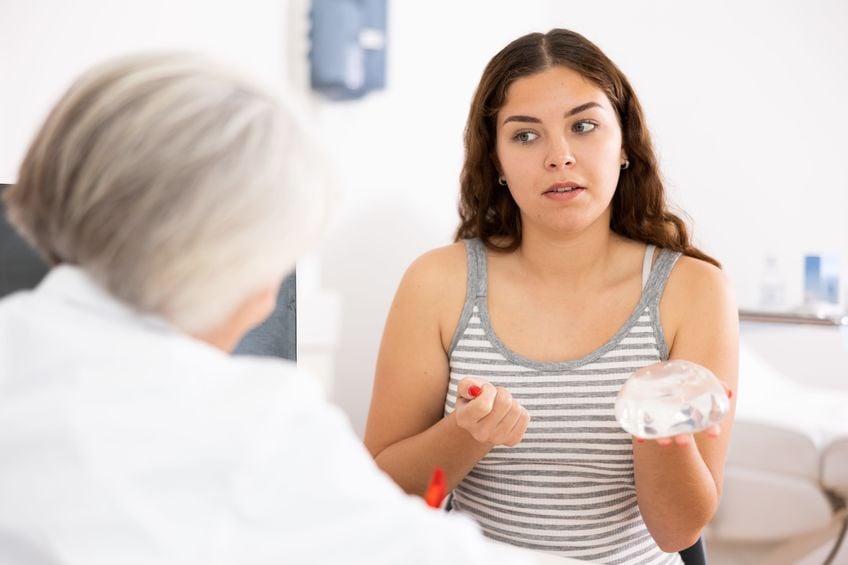
A pre-op breast augmentation checklist helps. Learn what to do leading up to surgery for optimal results.
Ready for a balanced, natural-looking breast enhancement? Combine augmentation with fat transfer.
Going bigger the second time involves more than choosing a larger implant. Learn what surgeons consider during breast revision surgery.
Wondering why breast augmentation alone may not be enough? Learn when sagging, stretched skin, and volume loss may require a lift as well.