
Share
Share
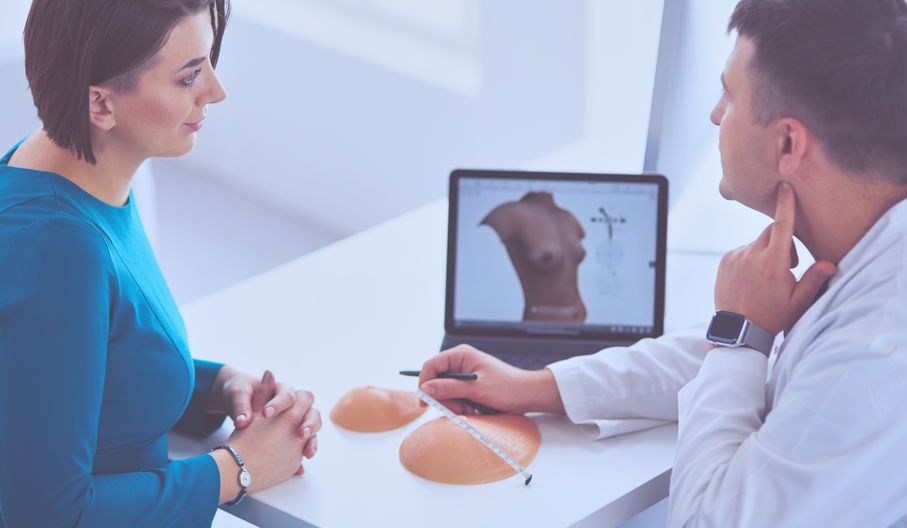
Get Ready For Your Breast Augmentation Consultation
Deciding to get breast augmentation can be exciting. At the same time, many factors and considerations go into each procedure. To ensure the best results, surgeons will discuss all the necessary steps and options in a breast augmentation consultation. This initial meeting is not simply an opportunity for the surgeon to explain the process. The hopeful patient gets to ask questions and feel confident in the decision. There are countless questions, but the ones that matter cover topics like type, sizing, and placement.
What are your qualifications and experience?
Asking the surgeon about experience and qualifications is not uncomfortable, but welcomed. Surgeons are willing to share a summary of qualifications, along with past examples of breast augmentations. Many surgeons have several years of experience and are proud to be board-certified, which comes with additional standards. Experienced surgeons can provide recommendations based on years of procedures to ensure the patient achieves excellent results.
Which implant type do you recommend?
Surgeons perform breast augmentations with saline or silicone implants. Saline implants are spherical shells filled with a sterile saline solution. These implants are installed deflated and then filled with the saline solution. Saline implants are ideal for patients wanting additional size and volume, with a larger upper pole. Silicone implants are pre-filled with silicone with a texture and feel like breast tissue. These implants are more appealing for those who want subtle changes and a more natural look. Silicone implants are round or teardrop-shaped, known as gummy bear implants.
How do I choose the right size?
Achieving larger, fuller breasts is the objective for most breast augmentation patients. Choosing the right size is a highly individual process that is not about simply increasing bra size. Implants are measured in cubic centimeters (cc) since cup sizes vary. The surgeon will recommend the best implant size based on the patient’s goals, body frame, chest width, and existing breast tissue. On average, about 200-275cc can increase a cup size depending on the patient’s height and dimensions. Surgeons use sizing tools, like three-dimensional (3D) imaging or special bras, to help patients envision potential results.
Which implant shape is best?
Along with implant size, the implant’s shape determines the patient’s results. Rounder implants are ideal for fuller breasts and more cleavage. These larger, rounder implants are often saline-based. Teardrop implants have an anatomical shape and are ideal for patients who want a more natural look. Options like silicone or gummy bear implants work best here. Choosing the right shape and size also determines the implant profile, meaning how the implant will project from the chest.
Where will the implants be placed?
Implants can be placed in front or behind the pectoralis major muscle. A submuscular implant placement ensures the implant goes behind the initial layers of chest muscles. Incisions are made in the chest muscles to insert the implant, extending recovery time. Submuscular implants stay in place more effectively and are ideal for women with less breast tissue but who want a natural breast slope. Subglandular implants go in front of the muscle but behind the breast tissue. This option is less invasive and is recommended for larger implants and more cleavage. While there is a shorter recovery time, there is a higher risk of capsular contracture and rippling.
What is my recovery time?
As breast augmentation is a cosmetic procedure, recovery time is required. On average, a full recovery where the patient sees the final results can take 2-3 months. Patients will experience swelling, soreness, and bruising within the first 2 weeks of recovery. Returning to desk work and light activity after 1-2 weeks is allowed. At 4-6 weeks, most patients can return to normal activities, including exercise. During this time, the implants will begin to drop and fluff or settle into place. The recovery timeline can vary depending on factors such as implant placement, incision sites, and patient health.
Will I need additional surgeries?
Implants are long-lasting, with many patients enjoying breast implants for 10-15 years, or longer. While the chances are low, additional surgeries may be required for implant ruptures or capsular contractures. Some implants may ripple or change position, creating an unwanted look and requiring correction. Some patients choose to remove implants later for a different look or personal reasons. Additional surgeries involve implant replacement, removal, or a breast lift, which is common with age.
Don’t hesitate to ask questions
The initial consultation is a great opportunity to learn about breast augmentation. The meeting ensures potential patients have a clearer picture and realistic expectations of the surgery. Individuals also learn more about implant types, size, shape, and placement. Through these consultations, surgeons determine if the individual is the right candidate for surgery. Take the first step to breast augmentation and make the right decision with confidence.
Related Posts...

A pre-op breast augmentation checklist helps. Learn what to do leading up to surgery for optimal results.
Ready for a balanced, natural-looking breast enhancement? Combine augmentation with fat transfer.
Going bigger the second time involves more than choosing a larger implant. Learn what surgeons consider during breast revision surgery.

Wondering why breast augmentation alone may not be enough? Learn when sagging, stretched skin, and volume loss may require a lift as well.