
Share
Share
Addressing Your Aesthetic Needs
Aging brings subtle but noticeable changes to the face. Some people notice premature signs of aging, like fine lines, sagging skin, and loss of volume. These may appear as early as age 35, continuing into an individual’s 40s and 50s. If these changes do not reflect how someone feels inside, cosmetic procedures and strategies help. Today’s cosmetic procedures offer more choices than ever before. Some patients prefer quick, non-surgical treatments such as dermal fillers or Botox. Others choose techniques that produce detailed, dramatic, long-lasting results, such as a full facelift. Understanding the differences helps in deciding which option is best.
Looking for a quick fix?
Some people want quick fixes that address initial signs of aging. Non-surgical procedures include Botox and dermal fillers. Botox is a botulinum toxin injection that temporarily relaxes facial muscles to smooth fine lines and wrinkles. Most individuals use Botox around the eyes and forehead to improve glabellar lines and crow’s feet wrinkles. Dermal fillers are natural compounds, like hyaluronic acid, that restore lost volume in the cheeks, lips, and jawline. Injecting specific amounts in strategic locations creates a lifted, youthful appearance. These treatments are minimally invasive, often taking less than an hour. Non-surgical treatments are provided by dermatologists, estheticians, and surgeons, with results visible almost immediately.
Benefits and limits of non-surgical options
Non-surgical options provide convenience and subtle enhancement. These are great entry-level cosmetic strategies. Recovery is minimal, often limited to minor swelling or bruising that resolves quickly. Results are natural-looking and can be customized based on individual needs. For patients not ready for surgery, these treatments offer an effective way to refresh the face without downtime. Some individuals get non-surgical treatment on weekends or during a lunch hour. Despite the many advantages, these quick fixes are temporary. Botox lasts 3-4 months, while fillers may last 6-18 months, depending on the product used. Multiple sessions are needed to maintain the results, but the effectiveness of these options can decline as years progress. These treatments cannot correct significant sagging or excess skin. Over time, the repeated sessions add up, making non-surgical treatment costly to maintain.
When a full facelift is the better choice
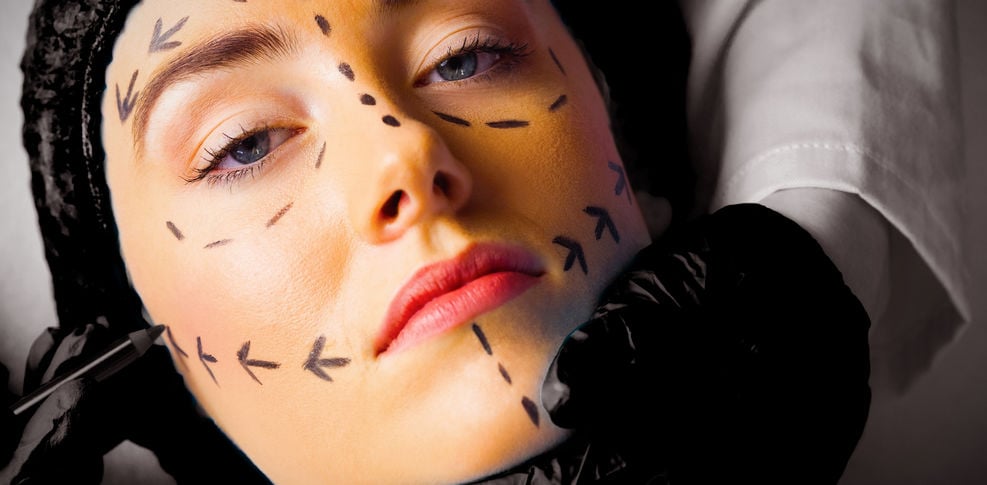
A full facelift addresses deeper signs of aging, such as jowls, sagging skin, and deeper folds around the mouth and chin. The jawline becomes more rounded, losing that youthful, sharp contour. A full facelift is a complex surgical procedure that can take at least 2 hours. Incisions along the hairline from ear to ear are necessary to perform a full facelift. The surgeon lifts and tightens both skin and underlying tissues, creating a more youthful, natural contour. Incisions are then hidden in the hairline. Results last much longer than nonsurgical options, often 10 years or more. For patients with advanced aging and significant sagging, a facelift offers comprehensive rejuvenation that quick fixes cannot match.
Recovery and results compared
Recovery from a full facelift typically takes 2-4 weeks, with swelling and bruising gradually improving. The final results can take longer, needing several additional months for healing and underlying tissue to settle. While downtime is longer, the results are more noticeable and last longer. Patients must allocate time for surgery and recovery. Most are happy with the results and can look at least 8 years younger. Quick fixes require little to no recovery time but must be repeated regularly to maintain the look. The results can be subtle and sometimes only noticed by the patient but not by others. Results are welcomed in younger individuals as the changes are more noticeable.
Making the right choice
The decision between quick fixes and a full facelift depends on age, skin condition, lifestyle, and goals. Younger patients or those seeking subtle changes may benefit most from Botox or fillers. Patients with more advanced signs of aging who want a long-lasting transformation may find facelifts a better option. In many cases, patients benefit from a combination approach. Some choose a facelift for long-term correction, then maintain and refine results with Botox or fillers. Anyone unsure about the right option should work with a surgeon to create a personalized plan. As everyone’s needs are different, the surgeon can ensure the chosen option delivers on both confidence and natural beauty.
Related Posts...
Modern lower blepharoplasty uses fat repositioning and preservation to smooth under-eye bags while maintaining natural volume and a refreshed appearance.
Aging around the eyes needs a specific procedure. Learn whether blepharoplasty or a brow lift is best.
Turn back the clock on tired eyes. See how combining upper and lower blepharoplasty restores both appearance and function.
A facelift can tighten loose skin, but surgery cannot undo years of sun damage or poor skin health. Learn why skin quality matters before surgery.